
Bridging Care and Communication: How a Language Micro-Credential Transforms Nursing Education
医療ケアとコミュニケーションをつなぐ:語学のマイクロクレデンシャルは看護教育をどのように変革するか

Note: This article was written based on a recorded interview with Dr. Lucia Osa-Melero, Associate Professor and Director of the Center for Hispanic Studies at Duquesne University.
注記:この記事は、デュケイン大学ヒスパニック研究センター長兼准教授であるルシア・オサ=メレロ博士への録音インタビューに基づいて作成されました。
It was more than fifteen years ago when a simple question sparked what would become a transformative partnership at Duquesne University: Could nursing students take an elective in Spanish for medical purposes?
デュケイン大学における変革的なパートナーシップのきっかけとなった素朴な質問が発せられたのは、15年以上前のことでした。「看護学生が医療現場で使えるスペイン語を選択科目として履修することはできますか?」
Posed by the School of Nursing to what was then the Department of Modern Languages and Literature, that question planted the seed that grew into a full-blown, three-semester micro-credential course and a model for how language education can directly support workforce readiness in healthcare.
看護学部から当時の現代外国語・文学部になされたその質問が種となり、全3学期にわたる本格的なマイクロクレデンシャル(特定のスキル修得を証明する資格)コースへと成長し、語学教育が医療現場での実践準備をどのように直接支援できるかを示すモデルとなりました。
A Partnership Born from Need
ニーズから生まれたパートナーシップ
The original course began modestly: one elective section of “Spanish for Medical Purposes,” enrolling 10–15 highly motivated nursing students interested in expanding their Spanish abilities each semester. For many, the course served as preparation for a service trip to Nicaragua, where students supported communities with medical needs. The results were immediate and compelling. Students reported high satisfaction, strong engagement, and clear real-world value.
当初のコースはささやかに始まりました。毎学期、スペイン語能力の向上に関心を持つ意欲的な看護学生10〜15名が履修する「医療現場で使えるスペイン語」という選択科目の1クラスでした。多くの学生にとって、このコースは医療ニーズを抱えるコミュニティを支援するニカラグアでの奉仕活動への準備として役立ちました。その成果はすぐに現れ、非常に説得力のあるものでした。学生からは高い満足度、積極的な参加、そして現実世界での明確な価値が報告されました。
Over the next few years, the program evolved in response to societal changes. Growing linguistic diversity in U.S. healthcare settings made the demand for Spanish increasingly urgent. At the same time, structural changes within the university, most notably the removal of foreign language requirements after the pandemic, placed pressure on language programs to rethink their role.
その後の数年間で、プログラムは社会の変化に応じて発展していきました。米国の医療現場における語学的な多様性の高まりにより、スペイン語への需要はますます緊迫したものとなりました。同時に、大学内の構造改革、とりわけパンデミック後の外国語必修化の廃止は、語学プログラムに対して自身の役割を再考する圧力をかけることになりました。
“It was the right moment,” recalls Dr. Lucia Osa-Melero, Associate Professor and Director of the Center for Hispanic Studies at Duquesne. “We [the language department and the nursing school] needed each other. The School of Nursing saw the need for Spanish in clinical contexts, and we needed students. We combined forces.”
「絶好のタイミングでした」とデュケイン大学ヒスパニック研究センター長兼准教授のルシア・オサ=メレロ博士は振り返ります。「外国語学部と看護学部はお互いを必要としていました。看護学部は臨床現場でのスペイン語の必要性を感じており、私たちは学生を必要としていました。そこで私たちは力を合わせたのです」
That collaboration turned Spanish for Healthcare into a required one-semester course for all nursing students. Eventually, it grew into something even bigger.
その協力関係により、「医療スペイン語」はすべての看護学生にとって必須の1学期コースとなりました。やがて、それはさらに大きなものへと成長していきました。
From Course Sequence to Micro-Credential
単一のコースからマイクロクレデンシャルへ
Today, the Spanish for Healthcare program consists of a three-semester sequence that forms a nine-credit micro-credential, Duquesne’s official term for an educational certificate. The structure is intentionally progressive:
現在、「医療スペイン語」プログラムは全3学期の体系で構成され、デュケイン大学の公式な教育修了証明書である計9単位のマイクロクレデンシャルを形成しています。その構造は意図的に段階的なものとなっています。
- Spanish for Healthcare I (Required): Introduces foundational language and communication skills tailored to clinical settings.
- 医療スペイン語 I(必修): 臨床現場に特化した基礎的な語学力とコミュニケーションスキルを導入します。
- Spanish for Healthcare II (Elective): Builds on those skills with more advanced scenarios and vocabulary, offered at times that accommodate nursing students’ tightly structured schedules.
- 医療スペイン語 II(選択): 看護学生の密度の高いスケジュールに対応した時間帯で開講され、より高度なシナリオと語彙を用いてそれらのスキルを伸ばします。
- Spanish for Healthcare III (Capstone – Study Abroad): A three-week immersive experience in Costa Rica, developed in partnership with Universidad Veritas.
- 医療スペイン語 III(集大成コース・海外留学): ベリタス大学との提携により開発された、コスタリカでの3週間の実践的イマージョン体験です。
The capstone is where everything comes together. Students live with host families, attend daily Spanish classes focused on healthcare communication, and participate in community-based medical, nutrition, and public health activities.
この集大成コースこそが、すべてが結実する場所です。学生はホストファミリーと生活を共にし、医療コミュニケーションに重点を置いた毎日のスペイン語授業に出席し、地域社会に根ざした医療、栄養、公衆衛生の活動に参加します。
“It was clear to me that the third semester had to be immersive,” says Dr. Osa-Melero. “They start here, but they have to finish abroad.”
「3学期目は実践的なイマージョン型でなければならないことは私の中で明確でした。大学で学び始め、海外でそれを完成させるのです」とオサ=メレロ博士は語ります。
Spanish as a Clinical Tool
臨床ツールとしてのスペイン語
What makes this program distinctive is its framing. Spanish is not treated as a traditional academic subject, but as a clinical tool; one more skill nurses can use to provide better care to their patients.
このプログラムを特別なものにしているのは、その捉え方です。スペイン語は伝統的な学術科目としてではなく、看護師が患者により良いケアを提供するために使用できるもう一つのスキルという臨床ツールとして扱われています。
“That’s when students wake up,” Dr. Osa-Melero explained. “This isn’t about memorizing conjugations. This is another tool in your nursing toolbox.”
「そのときに学生たちの目が覚めるのです。これは活用形を暗記することではありません。看護の道具箱に入るもう一つのツールなのです」とオサ=メレロ博士は説明しました。
Instruction emphasizes oral communication with some focus on writing as well. Role-plays, simulations, and real-world scenarios dominate the classroom. Students rehearse patient intakes, symptom descriptions, and care instructions. They also practice with trained speakers of Spanish through virtual conversation platforms, strengthening confidence and fluency.
指導では口頭でのコミュニケーションを最重視し、筆記にも一定の焦点を当てています。授業ではロールプレイ、シミュレーション、現実世界のシナリオが中心となります。学生は患者の受付問診、症状の説明、ケアの指示などをリハーサルします。また、オンラインの会話プラットフォームを通じてトレーニングを受けたスペイン語話者と練習することで、自信と流暢さを高めていきます。
The goal is not full bilingualism, but functional, confident communication, enough to initiate conversations, reduce patient anxiety, and improve accuracy in care.
目標は完全なバイリンガルになることではなく、会話を開始し、患者の不安を和らげ、ケアの正確性を向上させるのに十分な、実用的で自信を持ったコミュニケーション能力を身につけることです。
“When a nurse can address a patient in Spanish, patient anxiety goes down,” said Dr. Osa-Melero. “Patients open up. Information flows more easily. Care improves.”
「看護師がスペイン語で患者に声をかけることができると、患者の不安は和らぎます。患者は心を開き、情報がよりスムーズに伝わるようになります。その結果、医療ケアが向上するのです」とオサ=メレロ博士は述べています。
Impact on Confidence, Equity, and Career Readiness
自信、公平性、キャリア準備への影響
The impact on students has been profound. Surveys from the Costa Rica capstone trip show dramatic increases in confidence, willingness to initiate conversations with Spanish-speaking patients, and motivation to continue learning. Students report moving from hesitation to eagerness, from fear to empowerment.
学生への影響は絶大なものでした。コスタリカでの集大成旅行に関するアンケート結果からは、自信、スペイン語を話す患者に進んで話しかける意欲、そして学習を継続するモチベーションが劇的に向上していることが示されています。学生たちは、ためらいから積極性へ、恐怖から自信へと変化したと報告しています。
The program also reinforces Duquesne’s commitment to patient-centered care and health equity. By addressing language barriers directly, students learn to meet patients where they are linguistically, culturally, and humanly.
このプログラムはまた、患者中心のケアと医療の公平性に対するデュケイン大学の取り組みを強化しています。語学の壁に直接向き合うことで、学生は言語面、文化面、そして人間的な面において患者の目線に立った対応を学びます。
A Model for Cross-Disciplinary Collaboration
学問領域を超えた協力のモデル
For Dr. Osa-Melero, the success of the program offers a clear lesson for other institutions: relationships matter.
オサ=メレロ博士にとって、このプログラムの成功は他の機関に対する明確な教訓を示しています。それは「信頼関係が重要である」ということです。
“Face-to-face conversations with deans, faculty, and administrators went much farther than emails,” she said. “And data matters: student surveys, testimonials, proof of impact.”
「学部長、教員、管理者との対面での対話は、電子メールよりもはるかに効果的でした。そしてデータも重要です。学生アンケート、受講者の声、成果の証明などです」と彼女は語ります。
From pilot phases to orientation presentations, from flyers to social media outreach, building the program required persistence, creativity, and advocacy. But the payoff has been worth it.
試行段階からオリエンテーションでの発表、チラシからSNSでの情報発信に至るまで、プログラムの構築には粘り強さ、創造性、そして働きかけが必要でした。しかし、それに見合うだけの素晴らしい成果が得られました。
“Now,” she says, “we’re enjoying the results of the work we put in years ago.”
「今、私たちは数年前に投入した努力の成果を実感しています」と彼女は言います。
Looking Ahead
今後に向けて
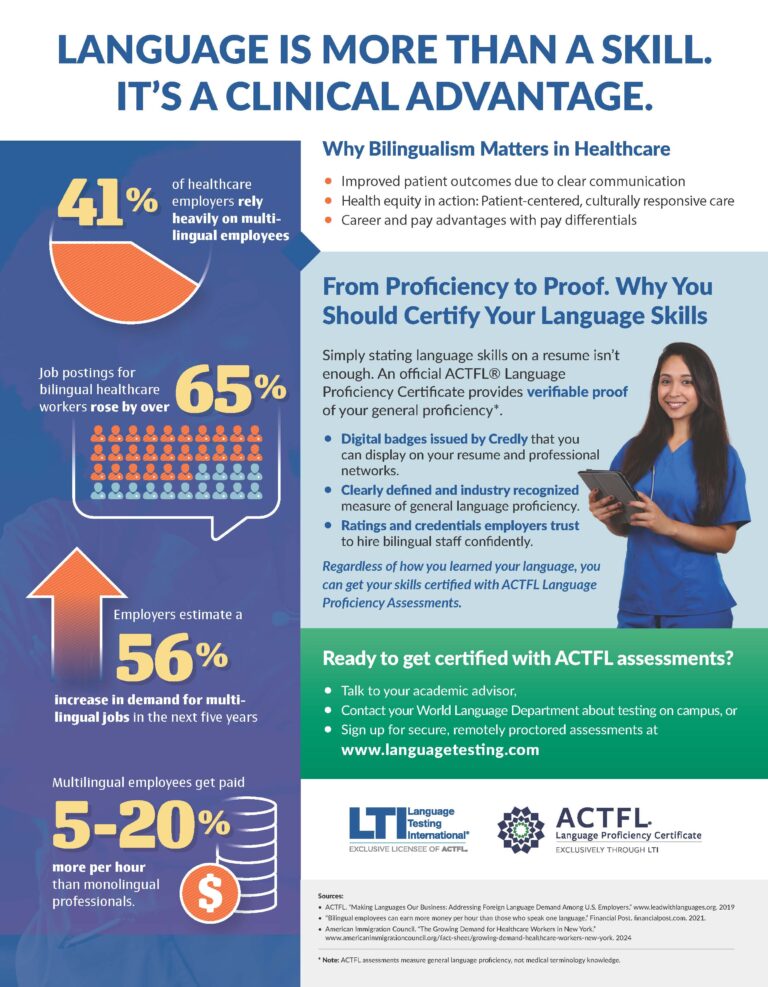
Looking ahead, the program is exploring pairing this powerful learning pathway with official credentialing. One natural next step is to offer students the opportunity to assess their Spanish skills with an ACTFL assessment such as the OPIc. While the micro-credential signals meaningful training and completion, an external proficiency rating gives students a clear, industry-recognized measure they can present to employers with confidence. Add in a Credly digital badge, something students can display on LinkedIn and share directly with hiring managers, and the value becomes even more tangible.
今後に向けて、この強力な学習の道筋と公式な資格認定を組み合わせることが検討されています。次のステップとしては、OPIcなどのACTFL評価試験を用いて学生に自身のスペイン語力を評価する機会を提供することです。大学のマイクロクレデンシャルは意味のあるトレーニングと修了の証ですが、外部の語学力評価は、雇用主に対して自信を持って提示できる明確で業界公認の尺度を学生に与えます。さらに、LinkedInに表示して採用担当者と直接共有できるCredlyデジタルバッジを加えることで、その価値はさらに具体的なものとなります。
For graduating nurses entering fast-paced, multilingual clinical environments, that combination can be a real differentiator, helping them stand out as candidates who are not only committed to patient-centered, equitable care, but also able to document the language skills that make it possible.
スピード感が求められる多言語の臨床現場に入る卒業間近の看護師にとって、その組み合わせは確かな差別化要因となり得ます。患者中心の公平なケアにコミットしているだけでなく、それを可能にする語学スキルを証明できる候補者として際立つのに役立ちます。
Are you looking to implement a language program for healthcare students and/or bring industry-recognized language credentials to your healthcare students? Language Testing International has great resources and checklists that can help with implementation. You can download them here.
医療系の学生向けに語学プログラムを導入したい、あるいは業界公認の語学資格を学生に提供したいとお考えですか? Language Testing Internationalでは、導入に役立つ優れたリソースやチェックリストをご用意しています。こちらからダウンロードいただけます。
Download the student poster here.
学生向けポスターのダウンロードはこちら。